The Problem
Creating high-performing content consistently is difficult and time-consuming.
Most teams struggle to identify patterns behind viral videos and replicate them at scale. The process of analyzing what works, writing scripts, recording, and distributing is manual and slow.
The Solution
I built an AI-powered system designed to analyze high-performing creators and replicate their content patterns programmatically.
The workflow operates in four stages:
1. Pattern Analysis
AI analyzes hundreds of high-performing videos from a specific creator to identify hidden patterns in structure, hooks, pacing, and messaging.
2. Script Generation
The system generates scripts optimized for the same style and engagement patterns.
3. Human Performance Layer
A real actor records the scripts to preserve natural voice, micro-expressions, and authentic delivery.
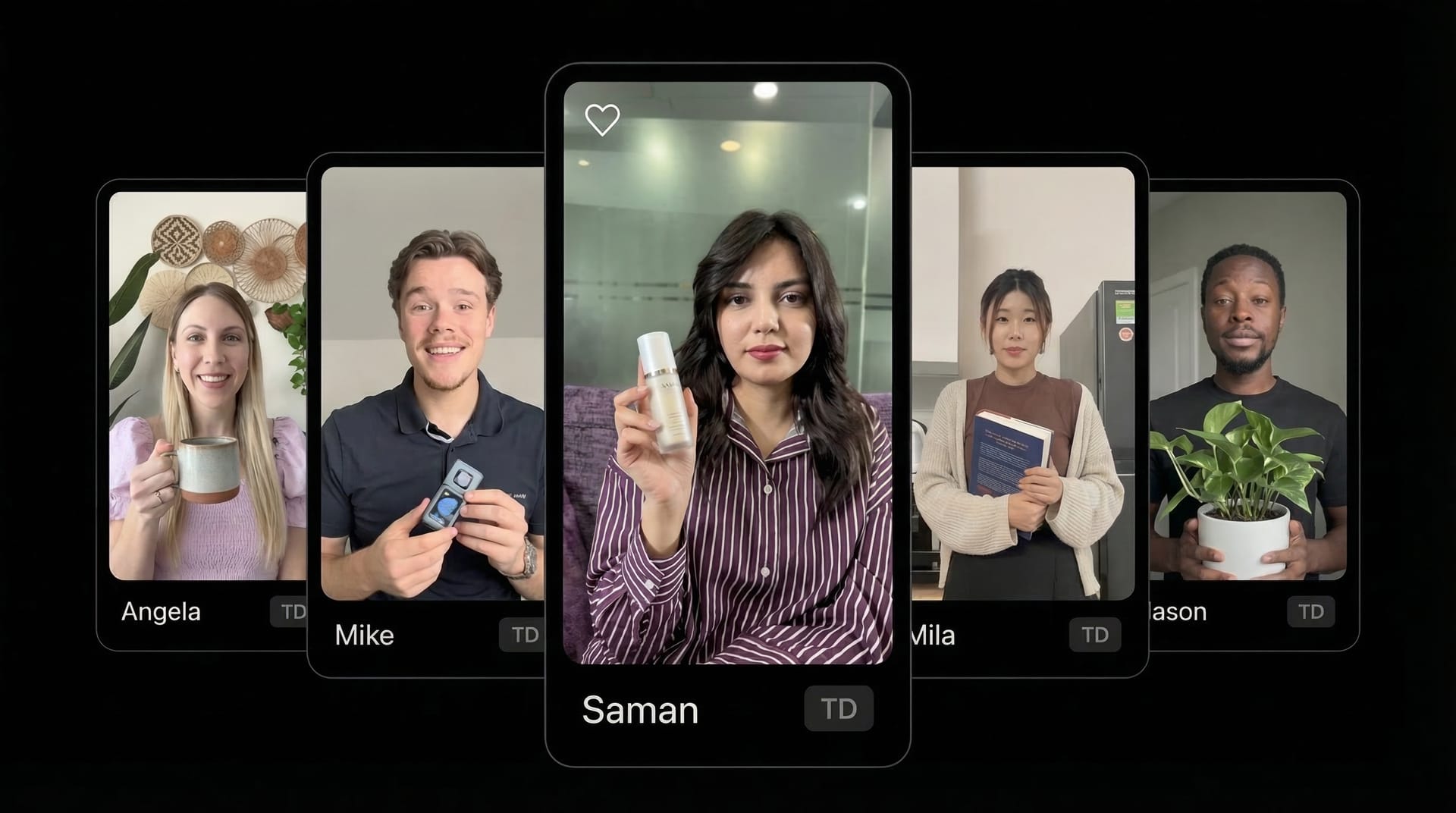
4. Motion Transfer Distribution
Using motion transfer workflows, the recorded content can be adapted into multiple variations with different actors and backgrounds, allowing the same format to scale across multiple channels.
System Architecture
Results
High-volume pipeline
Continuous content production without manual scripting bottlenecks
Proven structures
Replication of viral content patterns with data-backed optimization
Scalable distribution
Same format adapted across multiple accounts and audiences
What I Learned Building This
The most interesting insight from this project was that content virality is far more structural than creative. Once you break down enough high-performing videos into components, clear patterns emerge in hook timing, pacing, and information density.
I also learned that the real scaling bottleneck in content isn't production, it's distribution. Building the motion transfer layer was what made the system truly scalable, because one good performance could be multiplied across channels without re-recording.